


Childhood experiences do not simply fade with time; they can become biologically and psychologically embedded within the developing brain, influencing mental and physical health long into adulthood, particularly in women.
Image Source: The Mulberry Bush
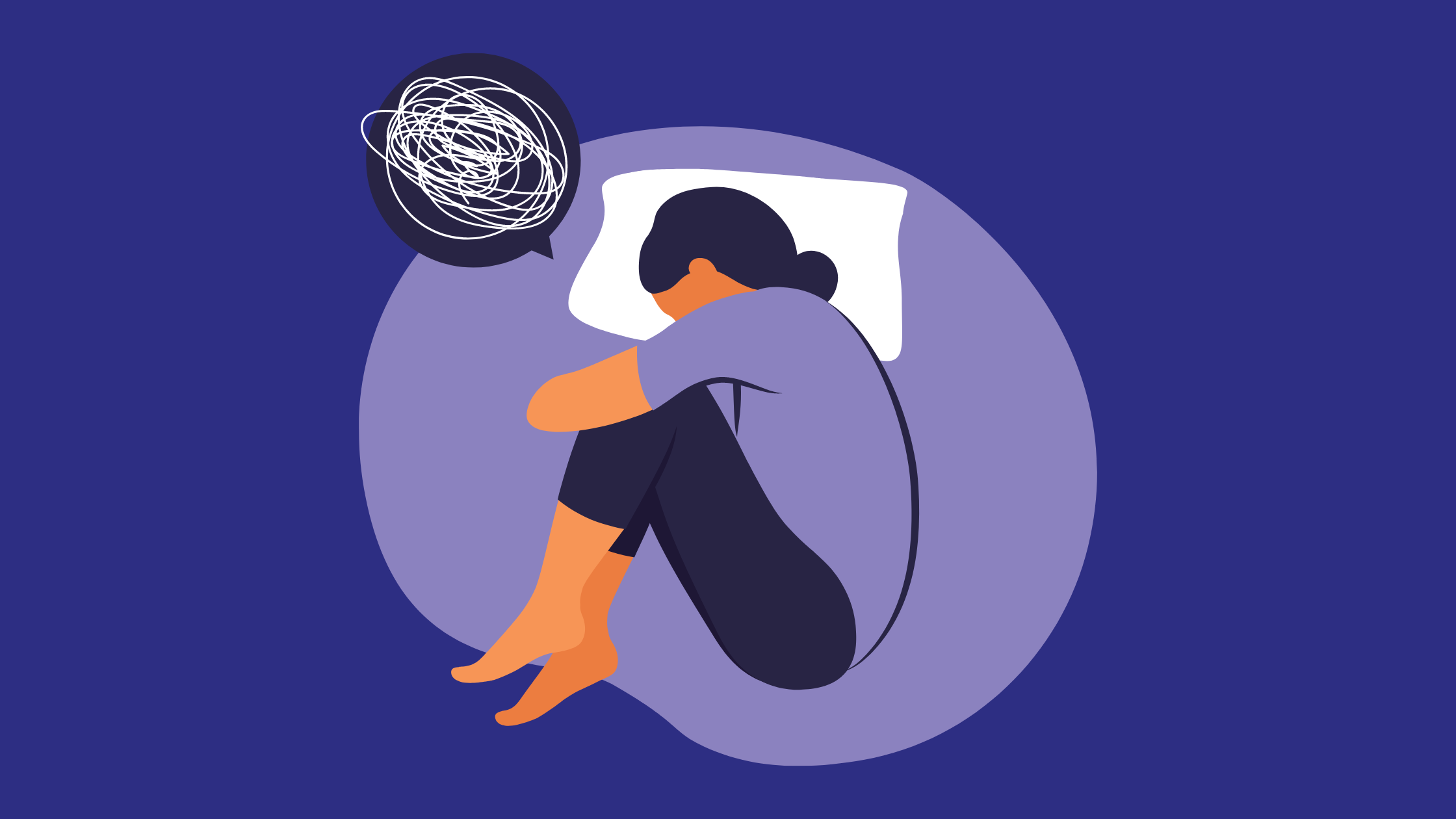 Childhood trauma can shape and alter the developing brain in various ways, as the brain is highly plastic, meaning it can continuously change and adapt in response to experiences and environmental influences. As the brain is still wiring itself during childhood and adolescence, it becomes more vulnerable to the different qualities of exposure. While positive experiences can help children gain emotional security and healthy coping mechanisms, traumatic experiences such as neglect, emotional abuse, physical abuse, sexual abuse, or chronic instability can significantly alter childhood development. Research in psychology and neuroscience has increasingly shown that childhood trauma (CT) not only affects emotional well-being but can also affect genetic, hormonal, and cellular mechanisms such as brain anatomy, stress regulation, relationships, and physical health later in life. These effects are crucial to study in women because women are statistically more susceptible and likely to develop trauma-related disorders such as anxiety, depression, post-traumatic stress disorder (PTSD), and borderline personality disorder (BPD) (Thomas et al., 2022). Biological and hormonal differences may influence how women respond to and process stress, causing trauma to manifest differently than in men.
One of the primary systems affected by childhood trauma is the body’s stress-response system, known as the hypothalamic-pituitary-adrenal (HPA) axis. The HPA axis regulates cortisol, the body’s natural stress hormone, which helps individuals respond to stressful or threatening situations to stay safe. However, chronic exposure to stress during childhood or CT can induce prolonged activation of this system, leading to elevated glucocorticoid levels that may negatively impact structural and functional brain development. According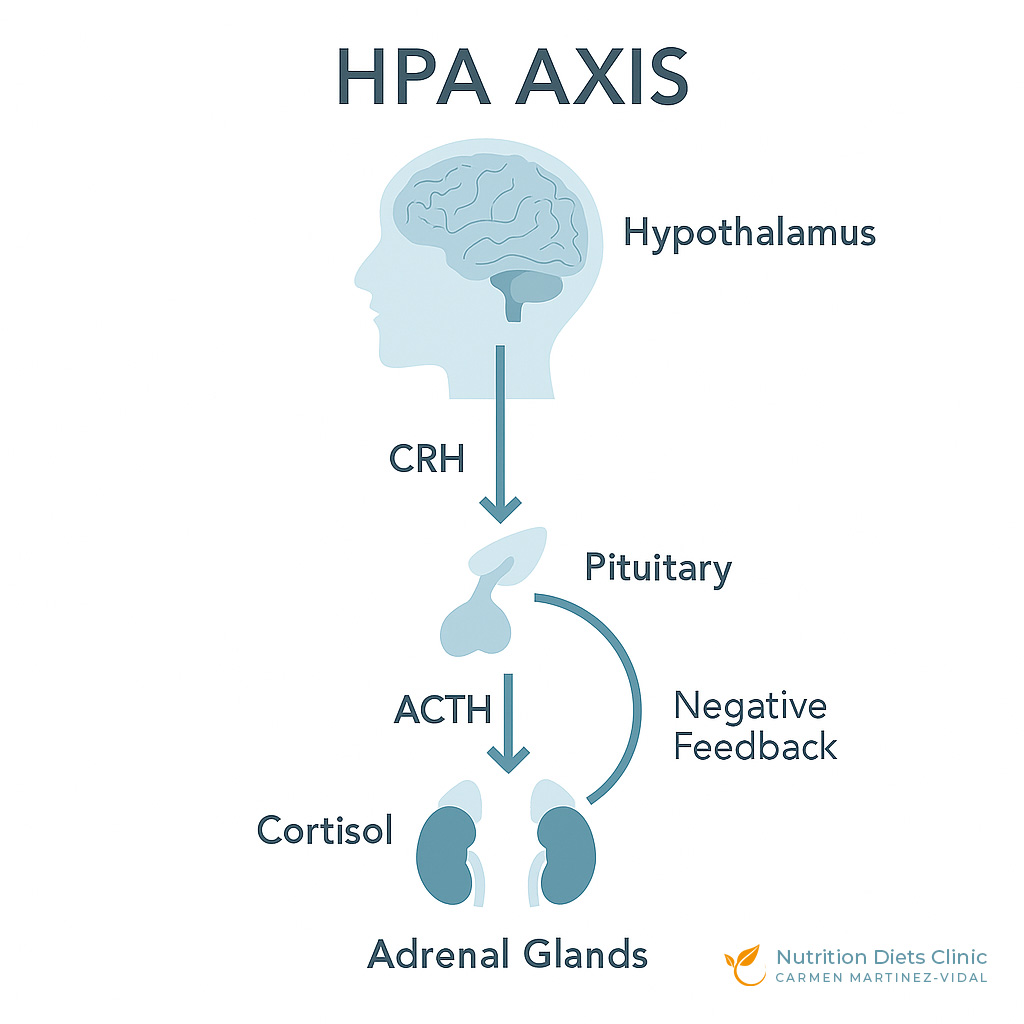
to Rosada et al., the hippocampus and amygdala contain high densities of glucocorticoid
receptors, as they both play a crucial role in our stress system; repeated stress exposures can alter these neurological structures and hence impair emotional regulation and memory processing. Since the brain is still developing, the presence of excessive stress hormones can interfere with healthy neural growth and social-emotional functioning later in life.
Image Source: Nutrition Diets Clinic
Women may be particularly vulnerable to the long-term neurological and psychological effects of CT because of differences in biological stress responses and social conditioning, such as estrogen influence on emotional regulation. Rosada et al. (2021) specifically focused their study on pre-menopausal women due to evidence suggesting that estrogen may have neuroprotective effects related to stress. Despite this, women remain significantly more likely than men to internalize emotional distress following trauma exposure such as CT. Rather than expressing trauma outwardly through aggression or risk-taking behaviours, women more commonly experience internalized symptoms such as chronic anxiety, shame, emotional withdrawal, self-blame, eating disorders, and depression.
References
1. Thomas EHX, Rossell SL, Gurvich C. Gender differences in the correlations between childhood trauma, schizotypy and negative emotions in non-clinical individuals. Brain sciences. January 29, 2022. Accessed May 23, 2026. https://pmc.ncbi.nlm.nih.gov/articles/PMC8870285/.
2. Rosada C. PMC Home. National Center for Biotechnology Information. Accessed May 23, 2026. https://pmc.ncbi.nlm.nih.gov/