

About Dr. Rowe
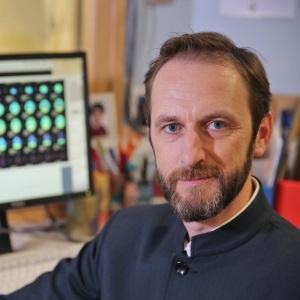 Dr. James Rowe is a neuroscientist and cognitive neurologist. He is also a P
 rofessor of Cognitive Neurology at the University of Cambridge. His scientific work has been published in more than 600 peer-reviewed articles, including Nature, Neurology, and Science. Dr. Rowe also led the pivotal Pick’s disease and Progressive supranuclear palsy Prevalence and Incidence study (PiPPIN), an epidemiological study of disorders caused by frontotemporal lobar degeneration. He is a leading expert in cognitive neuroscience.
About Frontotemporal Dementia
Frontotemporal dementia (FTD) is a neurodegenerative disorder characterized by atrophy of the frontal and temporal brain lobes. Behavioural changes, language difficulty, and compromised executive function are hallmark clinical presentations. FTD can be broadly categorized into genetic and sporadic forms. The genetic form is caused by an inherited familial mutation, while the sporadic form manifests with no known cause.
Although the incidence of genetic FTD is relatively equal across genders, extant literature indicates that women are less likely to develop FTD sporadically. Why might this be the case, given that women are otherwise overrepresented among other types of dementia cases? Dr. Rowe does not believe that women are less affected by sporadic FTD. Instead, he believes that these women are simply “missing”.
We asked Dr. Rowe a series of questions about his opinion on this phenomenon.
1. Many clinician-researchers believe that men simply just have a higher incidence of sporadic FTD, but you suspect the affected women are just unaccounted for. What first made you suspect that women with FTD were just missing from the literature?
“I’m always suspicious when people report gender differences. It’s obviously one of the first questions you ask in a study, but often people don’t ask the questions the right way, and they don’t look at confounds behind the data. What struck me about the FTD data was that whereas other common forms of dementia like Alzheimer’s disease where women are more affected, in FTD, it seemed to go the opposite way. You just have to kind of question that, given that the two diseases are common, what would drive the opposite effect in two age-related diseases? It just struck me as an anomaly. The next thing is that there’s a difference between the genetic and sporadic. So in terms of genetic FTD, it's equal men and women so again if women somehow had a mysterious resistance to the disease, surely you’d expect that to apply to the genetic and the sporadic. One of the things about the genetic form is that people are looking much more closely, and questioning their families about who’s had what types of symptoms. So maybe it’s an ascertainment bias in the sporadic FTD.”
2. In terms of diagnostic criteria and early referral bias for FTD, are there behaviours that would raise concern in a man but be viewed differently in a woman?
“Exactly, so you think about what lies behind the diagnostic criteria. A lot of the nature of behavioural FTD is breaking social norms: behaviours that are seen as improper or inappropriate. And social norms in many countries are just not equal for men and women; there are things that men can do that women can’t. So in diagnoses, it’s about breaking social conventions. Immediately you have to ask about if those criteria are fairly applied. Are you smoking, drinking, etc. So if these are the things you’re basing your diagnosis on, you have to be really thoughtful about implicit bias. Wives also might be more willing to bring husbands in for healthcare than husbands would for wives.”
3. Are women more likely to receive psychiatric diagnoses before receiving an FTD diagnosis?
“There’s some evidence of this. It’s common for men and women to be told FTD is an adjustment reaction, depression, or even get misdiagnosed as schizophrenia, bipolar, or personality disorder. All these things get mixed in. It’s common that these diagnoses are differentially applied to men and women. It’s not just about the wrong label, it’s about how long you live with the wrong label before the penny drops. Women could be more likely told this is depression or personality disorder or bipolar, and are also a lot likelier to live with the wrong diagnosis longer. The net effect of each of these biases is that women remain underdiagnosed.”
4. “True” differences between males and females might exist, but there is limited extant literature outlining possible differences, beyond the post-menopausal estrogen drop. What other biological differences do you suspect play a role?
“So there’s no doubt that menopausal symptoms are common at the age that FTD starts to pick up in the mid-50s, but actually, the average age of onset of FTD is 75, well past the age of menopausal onset for almost every woman. So I don’t think we can blame simple misattribution to menopause. There might be long-lasting effects of the estrogen drop on brain function, and I don’t want to dismiss that, but my money’s on the more tractable features of referral diagnosis and enabling to account for this differential effect. I think that’s much more likely. Partly because if it were biological, why wouldn’t this pattern show up in genetic FTD as well?”
5. In ten years, what would success look like in ensuring that women with FTD are no longer "missing" from diagnosis, care, and research?
“I think what we’d see is we would have done two things. We would know for certain whether it’s biological or non-biological factors that’s driving the difference, and for women getting diagnosed, they’d know just as quickly and just as accurately as men. That gives you the way forward for effective treatment in FTD.”